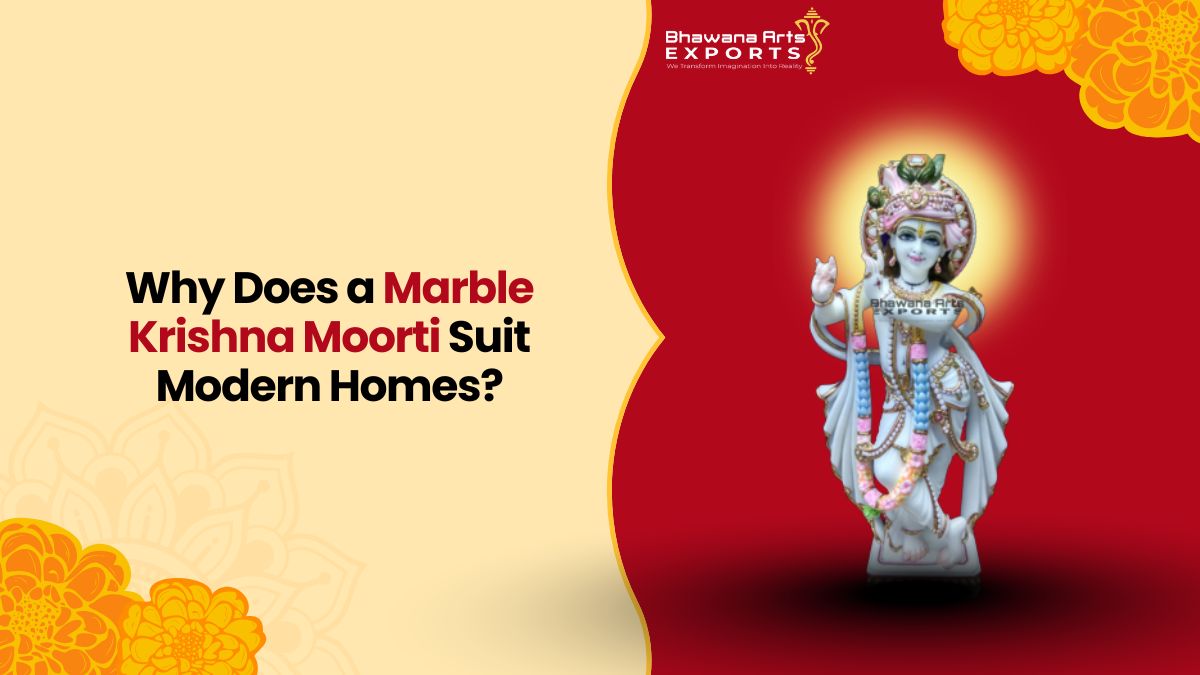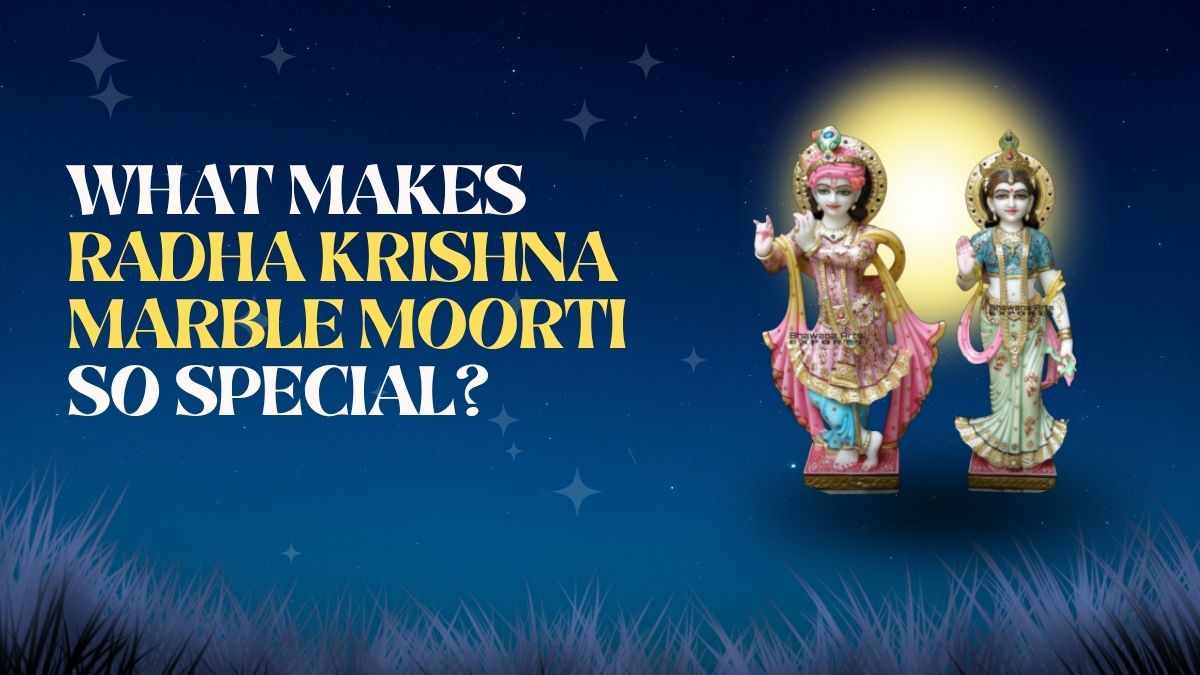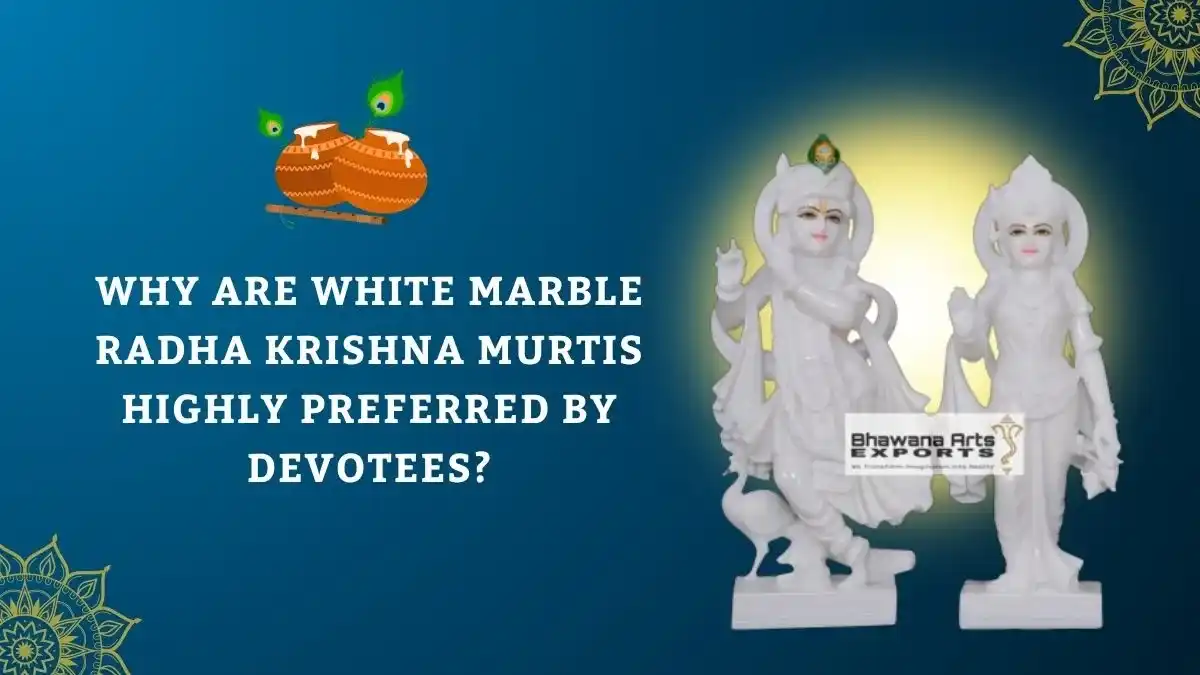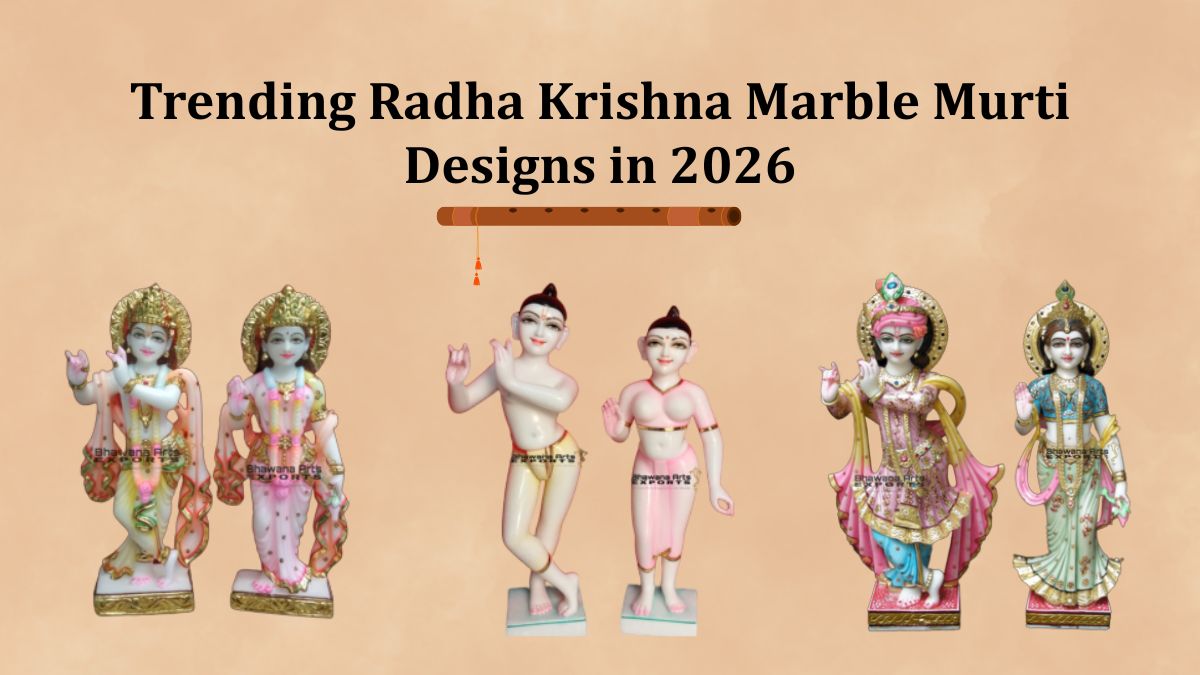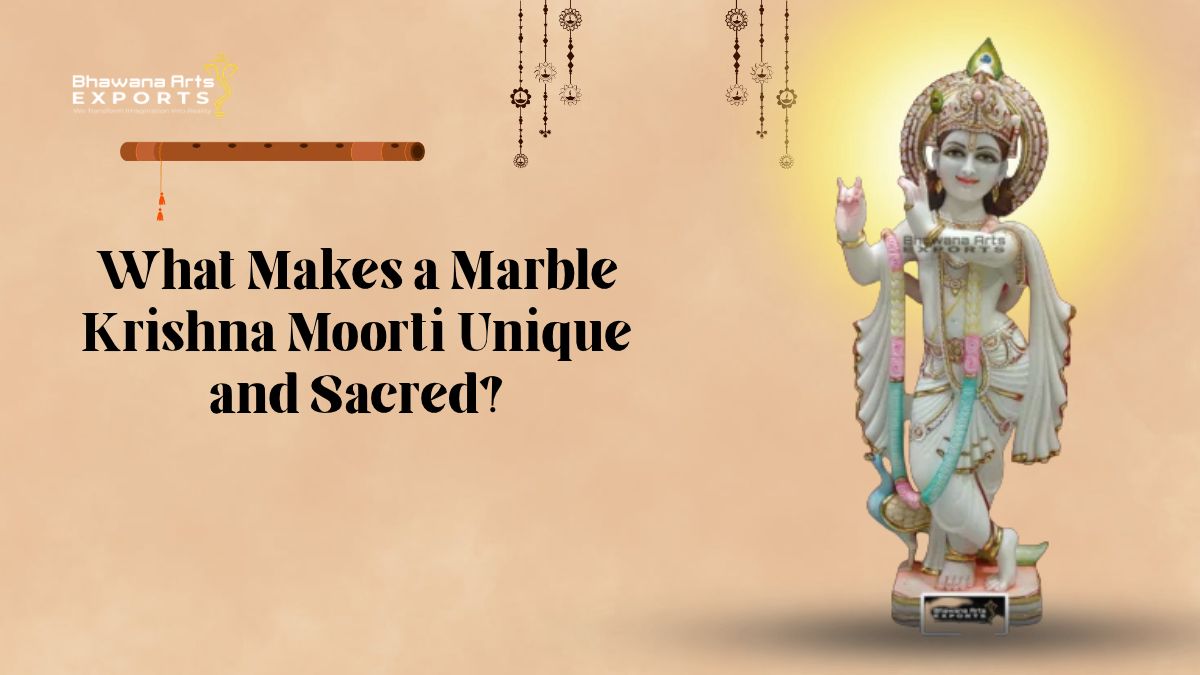
A Marble Krishna Moorti is more than a beautifully carved religious figure. For many devotees, it represents love, devotion, wisdom, compassion, and the playful nature of Lord Krishna. The combination of traditional symbolism and detailed marble craftsmanship makes Krishna idols a meaningful choice for home temples, spiritual spaces, and places of worship.
But what makes a Krishna idol truly special? Is it the quality of marble, the expressions, the carving technique, or the symbolism associated with Krishna? In reality, all these elements contribute to the beauty and sacred character of the statue.
A Krishna marble moorti combines religious symbolism with traditional Indian stone craftsmanship. White marble provides a smooth and elegant surface that allows artisans to create detailed features, ornaments, clothing patterns, and expressions.
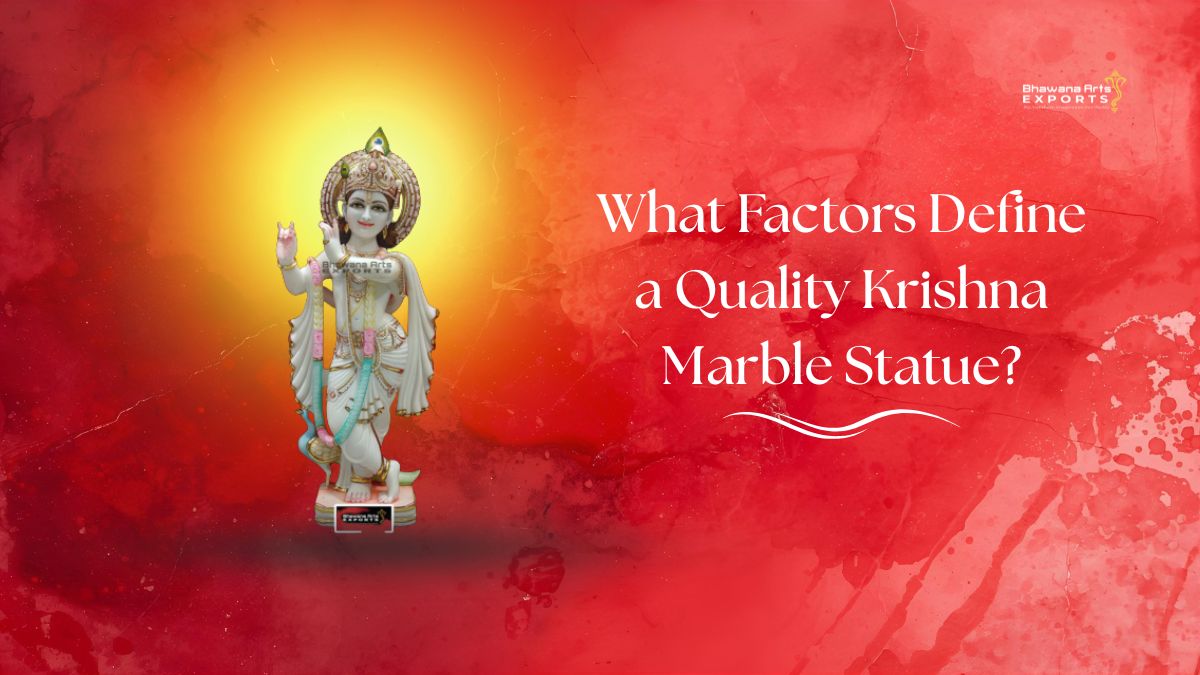
Krishna is often represented with familiar elements such as a flute, peacock feather, crown, jewellery, and graceful posture. Each feature carries its own cultural and devotional significance.
The fine surface of marble also allows artists to highlight small details that may be difficult to achieve on rougher materials. This is one reason marble remains a popular material for creating detailed Hindu religious statues.
A Krishna marble idol is considered sacred because Lord Krishna holds an important place in Hindu traditions and devotional practices. He is associated with several aspects of spiritual life, including love, dharma, wisdom, compassion, and devotion.
Different representations of Krishna may communicate different aspects of his personality. For example, Krishna playing the flute is often associated with divine love and spiritual attraction, while Bal Krishna represents innocence and childhood joy.
For devotees, the spiritual value of an idol is not determined only by its material or artistic quality. The statue becomes part of a personal or family worship space and can serve as a visual focus for prayer, meditation, and devotion.
Creating a Krishna Marble statue requires a combination of skilled craftsmanship, careful planning, and attention to detail. The process generally begins with selecting a suitable piece of marble.
The artisan then studies the stone and plans the proportions of the figure. Rough shaping is followed by more detailed carving, where facial features, hands, clothing, ornaments, and other elements are carefully developed.
One of the most challenging parts is creating the face. The eyes, lips, cheeks, and overall expression need to appear balanced and natural. Even a small change in proportion can affect the personality of the finished statue.
After the primary carving is complete, artisans work on finer details and surface finishing. Depending on the design, additional decorative work, polishing, painting, or ornamentation may be included.
Marble is widely appreciated for religious statues because of its smooth texture, elegant appearance, and ability to hold intricate details.
High-quality marble can provide a clean and refined appearance to a religious sculpture. Its light surface also gives Krishna statues a distinctive visual character, particularly when combined with colourful clothing, jewellery, flowers, or decorative elements.
Another advantage is the versatility of marble. Artisans can create statues in different sizes, poses, and designs, making it suitable for everything from compact home temple idols to larger temple sculptures.
However, not every piece of marble has the same characteristics. Factors such as texture, consistency, natural markings, and finishing quality can influence the appearance of the final statue.
When selecting a Krishna marble idol, it is useful to look beyond the overall appearance. Several details can help you understand the quality of the craftsmanship.
The face is one of the most important aspects of a Krishna statue. A well-crafted expression should appear calm, graceful, and proportionate.
The body proportions and posture should look balanced. Whether Krishna is standing with a flute or represented in another traditional pose, the overall composition should appear harmonious.
Look at the details of the crown, jewellery, clothing, flute, hands, and other decorative elements. Fine carving can add depth and character to the statue.
The marble should have a suitable texture and finish for the intended design. Natural variations are possible because marble is a natural stone, but excessive cracks or unwanted imperfections may affect the final appearance.
A good finishing process can enhance the smoothness and visual appeal of the sculpture. The surface should complement the carving rather than hide important artistic details.
A Marble Krishna Moorti can become an important part of a devotee's spiritual environment. Its presence may encourage regular prayer, reflection, and connection with religious traditions.
Krishna's teachings in the Bhagavad Gita are also closely connected with ideas such as duty, self-discipline, knowledge, and devotion. Because of this, a Krishna statue can represent more than religious decoration.
For many families, a Krishna idol is connected with traditions passed from one generation to another. It may be placed in a home temple where family members gather for prayer and festivals.
The meaning of the statue ultimately depends on the devotee and the tradition being followed. The physical sculpture provides a visible representation through which devotion can be expressed.
A Krishna Marble statue can be placed in a home temple, prayer room, meditation area, or other spiritually meaningful space, depending on personal beliefs and traditional practices.
Before placing an idol, it is useful to consider the available space, statue size, lighting, and overall surroundings. A larger statue may work well in a dedicated prayer room, while a smaller design can be suitable for a compact home temple.
Many people also consider the posture and form of Krishna when selecting an idol. The choice can be based on personal devotion, artistic preference, and the purpose of the space.
For specific religious placement rules or rituals, families may choose to follow the guidance of their priest or established tradition.
Choosing a Krishna marble idol should begin with understanding why you want the statue. If it is intended for daily worship, devotional significance and traditional representation may be the main priorities.
If the statue is being selected for a larger temple or spiritual space, size, proportions, durability, and craftsmanship may become more important.
You should also examine the carving from different angles. Details that look impressive from the front may not have the same quality from the sides or back. Checking the overall finish can help you make a more informed choice.
The right idol is ultimately one that combines meaningful representation, suitable craftsmanship, appropriate size, and personal spiritual connection.
The main difference is the meaning attached to the representation. A decorative sculpture may primarily be appreciated for its artistic appearance, whereas a Marble Krishna Moorti can have both artistic and devotional importance.
Its design often follows established religious iconography, while the craftsmanship brings those traditional elements into physical form.
This combination of art, culture, craftsmanship, and spirituality gives Krishna marble statues a distinctive place in Indian religious art.
A Marble Krishna Moorti is unique because it brings together spiritual symbolism and traditional stone craftsmanship. From the expressive face and graceful posture to the intricate ornaments and polished marble surface, every element can contribute to the character of the statue.
A carefully crafted Krishna Marble statue can represent devotion, cultural heritage, and artistic excellence at the same time. Meanwhile, choosing a Krishna marble idol requires attention to marble quality, proportions, carving details, finishing, and the purpose for which it will be used.
Ultimately, the value of a Krishna statue goes beyond its physical material. For devotees, it can become a meaningful representation of faith, love, wisdom, and devotion—qualities that have kept Krishna's presence central to Indian spiritual traditions for centuries.